Application Trends
2026, 3, 31
Linda H
Comprehensive Guide to 202026 U.S. Undergraduate Admissions: New Policies, Major Rule Shifts, and Intensified Competition
Analyze the latest trends in U.S. undergraduate applications for 2026.
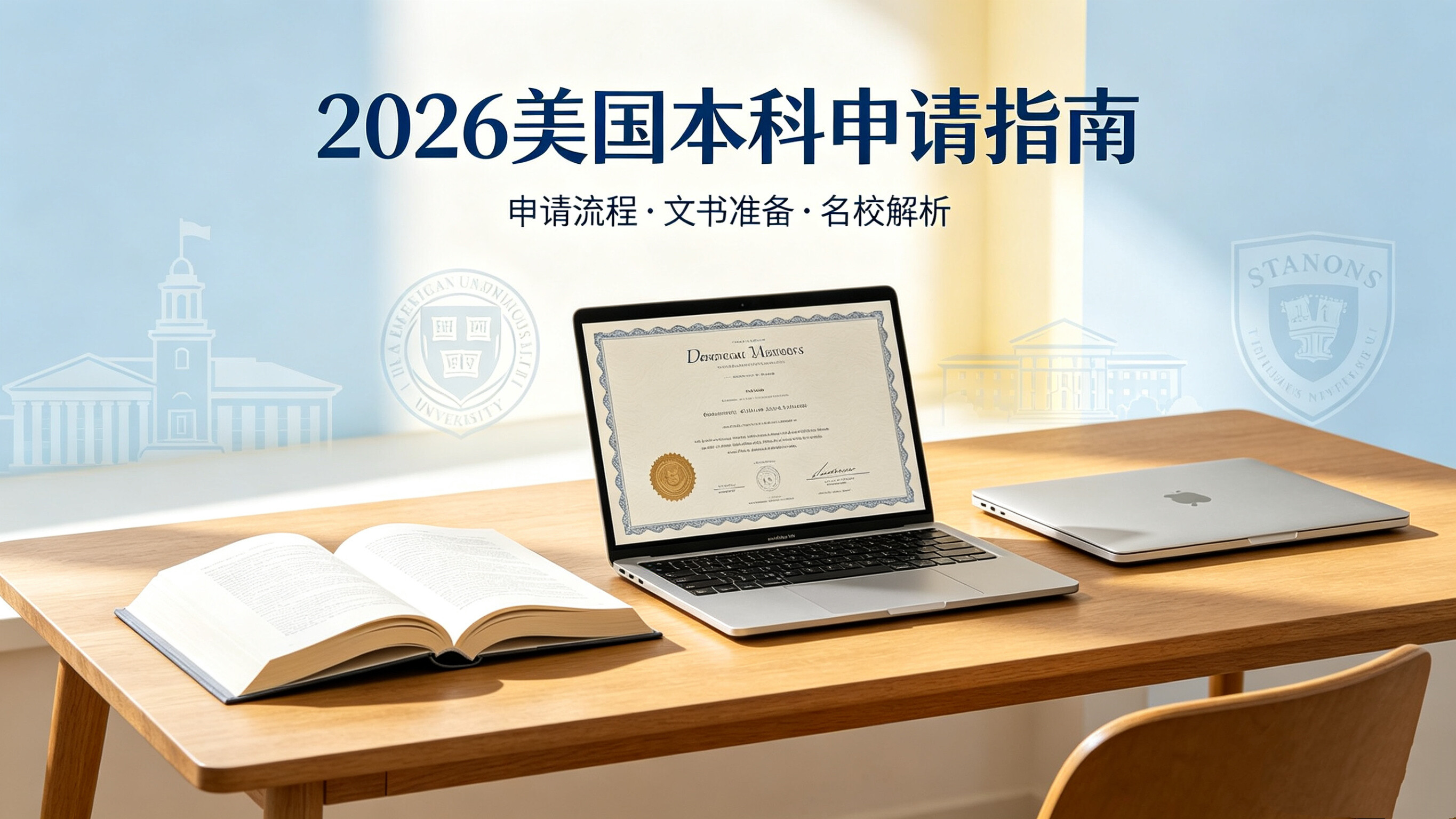
2026 U.S. Undergraduate Application Season: The Most Significant Policy Shift in Five Years
The era of relaxed admissions during the pandemic is officially over. Ivy League schools have fully reinstated standardized testing requirements, application rounds have been restructured, essay prompts have been updated, and scrutiny for international students has intensified. Whether you are a high school student with years of planning or a family just beginning the process, you must adapt to these new policies by recalibrating your test prep timeline, college selection strategy, and extracurricular development plan.
**1. The Big Picture: A Complete Overhaul of U.S. Admissions**
For several years following the pandemic, most U.S. universities adopted test-optional policies, not requiring SAT/ACT scores. Students could often gain admission to top schools based on GPA, activities, essays, and competitions, with standardized tests playing a minimal role. However, starting from the 2026 application cycle, the landscape has completely reversed:
• Top-tier universities have collectively restored mandatory standardized testing, ending the "test-optional" era.
• Application numbers have surged annually, driving acceptance rates down and intensifying competition.
• Admissions officers now prioritize genuine academic ability and advanced coursework over polished essays.
• International student reviews are stricter, rigorously verifying background authenticity and rejecting last-minute experience padding.
• Application deadlines, essay topics, transfer rules, and credit course recognition have all been updated.
Starting in 2026, the U.S. undergraduate application race has returned to a focus on hard metrics: academic grades, standardized test scores, and curriculum foundation are once again the primary criteria for elite university screening.
**2. Standardized Testing Reversal: Ivy Leagues Restart Mandatory SAT/ACT Submission**
This is the most impactful change for students in 2026. Previously, many students relied on the mindset that "you don't need test scores to get into a top school." That path is now closed. Six of the eight Ivy League schools—Harvard, Yale, Penn, Brown, Dartmouth, and Cornell—have explicitly mandated SAT/ACT submission for the 2026 application cycle. Elite STEM institutions like Stanford, MIT, Caltech, and Carnegie Mellon have followed suit, restoring mandatory testing. Popular public universities such as Georgia Tech, Georgetown, and Purdue have also joined the mandatory list. Even schools retaining test-optional policies heavily favor applicants with high scores; submitting no score puts you at a significant disadvantage. Furthermore, score thresholds are rising:
• For U.S. Top 5 schools, the median SAT score is generally 1530+.
• For Top 6–30, scores consistently range between 1480 and 1520.
For Chinese students with average or no standardized test scores, competing for top-tier universities is nearly impossible. Submitting low scores can actually damage your overall application profile. Some schools offer flexible policies allowing high AP or IB scores to substitute for SAT/ACT, but the bar is extremely high, effectively equivalent to achieving top standardized test scores. This shortcut is not recommended for average students.
**3. Application Round Adjustments: New Batches and Earlier Deadlines**
In 2026, multiple top universities adjusted their application rounds and deadlines, disrupting traditional preparation timelines.
Popular public universities like the University of Michigan have added Early Decision (ED) batches, offering more opportunities for early-planned, high-fit students. This means aspiring candidates must finalize their college lists and draft essays much earlier. Overall deadlines have shifted forward, significantly compressing the time available for retaking tests, revising essays, and organizing materials. In the past, students could refine essays until December; now, college selection, activity organization, and initial essay drafts must be completed by the second semester of sophomore year, leaving junior year solely for test prep and finalizing applications. Additionally, universities have tightened rules regarding cross-round applications (ED, EA, RD), limiting random multiple submissions and demanding higher professionalism in application planning.
**4. New Essay and Recommendation Guidelines: Reject Templates, Value Authentic Growth**
In 2026, the Common App essay prompts were slightly revised, adding themes related to artificial intelligence, academic exploration, personal growth, and value reflection. Admissions officers are tired of formulaic, template-driven inspirational stories. They now prioritize:
Genuine personal experiences, independent critical thinking, the origin of academic interests, problem-solving skills, and long-term passion and growth.
Recommendation letter reviews have also become stricter. Officers prefer recommenders who provide specific content and truly know the student; generic template letters no longer add value. This serves as a reminder: essays and background experiences cannot be packaged overnight. They require long-term accumulation and authentic development to create distinctive, compelling content that resonates with admissions officers.
**5. Rising Value of Advanced Academic Backgrounds: AP/IB/Online Credit Courses Become Standard**
Alongside the return of standardized testing, top universities increasingly recognize advanced academic coursework backgrounds. AP, IB, overseas university pre-college courses, and online credit courses have seen a significant weight increase in the 2026 application cycle. These programs demonstrate academic potential and self-directed learning, aligning with university preferences; they enrich academic records, distinguishing applicants from the crowd; and some credits can be converted into university credits upon enrollment, saving both time and money.
These options are particularly suitable for students with average GPAs seeking to leverage academic backgrounds to compete for top schools. Future U.S. undergraduate admissions will no longer rely on a single score but rather a comprehensive academic profile including GPA, standardized tests, advanced coursework, competitions, and activities. Online credit courses have become a mainstream asset for top university applications.
**6. Stricter Review for International Students: Focus on Authentic Records and Long-Term Academic Trajectory**
In 2026, U.S. universities tightened their review processes for Chinese international students, focusing on core areas:
• Language proficiency thresholds have risen, with steady increases in required TOEFL and IELTS averages.
• Rigorous verification of activities, competitions, and research to prevent over-packaging.
• Preference for long-term, stable academic trajectories over short-term background padding.
• Emphasis on major alignment, course selection logic, and the rationality of future planning.
Simply put, application strategies relying on template essays, last-minute activity filling, and crash-course background building are increasingly likely to fail. Steady, grounded improvement is the most reliable path.
**7. Hot Majors Landscape: STEM Remains Highly Competitive, Interdisciplinary Fields Emerge as New Frontiers**
Computer Science, AI, Electrical Engineering, and Business remain the most popular choices among Chinese students, with admission barriers rising yearly.
Conversely, emerging interdisciplinary majors such as Liberal Arts & Sciences intersections, Social Science Quantification, Media Data, Environmental Science, and Education Policy are seeing rising interest with relatively moderate competition. These fields are ideal for creating a balanced portfolio of reach, target, and safety schools. In the 2026 application cycle, do not blindly follow trends when selecting majors. You must combine your grades, interests, and long-term plans to scientifically structure your major and school tier strategy.
**8. Practical Planning Advice for 2026 U.S. Undergraduate Applicants**
Based on all new policy changes, here is an actionable planning guide:
1. Start SAT/ACT prep early without hesitation or delay to secure a high-score window.
2. Maintain a strong school GPA while simultaneously taking AP, IB, or online credit courses to solidify your academic foundation.
3. Plan extracurricular activities for the long term; avoid last-minute padding and build a unique personal growth narrative.
4. Organize essay material and outline frameworks in the second half of sophomore year; do not rush to meet deadlines at the last minute.
5. Strategically layer colleges and majors with a mix of reach, target, and safety schools to maximize admission chances.
6. Continuously monitor official policy updates; do not rely on outdated past-year experiences, but dynamically adjust your strategy.
**Conclusion**
The 2026 U.S. undergraduate application season marks the end of the lenient period and the beginning of an era defined by hard skills, academic excellence, and meticulous planning. With standardized testing returning, rules tightening, reviews becoming stricter, and competition intensifying, the threshold appears higher. However, for students willing to plan ahead and invest in genuine growth, this environment offers a clearer path to stand out through true merit. Understanding the policies, recognizing the trends, and laying the groundwork early is the safest way to aim for top-tier universities.